Theater
VMT play
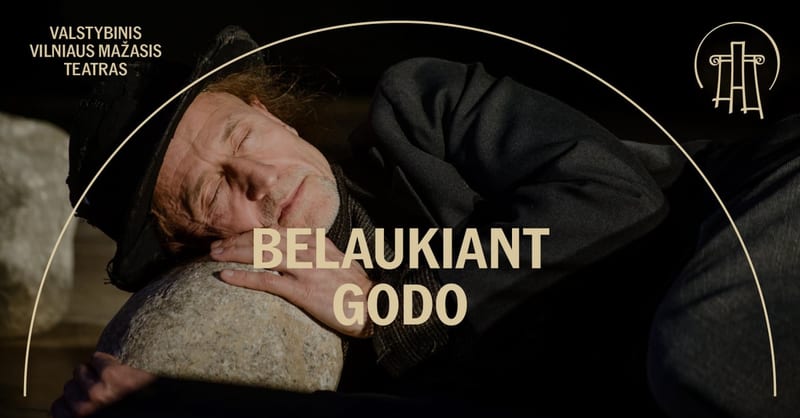
Waiting for godot
About this event
A strangely dreamlike, mystical, and absurdly immersive legendary two-part play
Like every production by Rimas Tuminas, this one is no exception – "Waiting for Godot" was born from the inner life of the State Small Theatre of Vilnius, its rhythm, moods, and needs.
Director – Rimas Tuminas
Playwright – Samuel Beckett
Set Designer – Adomas Jacovskis
Composer – Faustas Latėnas
Makeup and Costume Designer – Vilma Galeckaitė-Dabkienė
Translated from French by Antanas Gudelis
ESTRAGON – Andrius Žebrauskas
VLADIMIR – Arvydas Dapšys
POZZO – Mindaugas Capas
LUCKY – Balys Latėnas
BOY – Daumantas Ciunis
Appearing at the end of 2002, this work based on the legendary play by Nobel laureate Samuel Beckett was no accident in the theatre's repertoire. Born in the theatre's unfinished renovation spaces, the play not only conveyed the moods and expectations of the theatre people but also seemed to have grown out of that sparse, vaulted space shrouded in mystery.
Even while rehearsing, the director insisted on calling it not a play, but a "theatrical evening." This impression of an unfinished stage work that does not impose a specific interpretation was successfully preserved even after the premiere in 2006. The director, together with the creative team and just five actors, immerses the audience in a very dense and suggestive atmosphere, inviting them to engage in a gourmet stage game and become witnesses to the birth of theatre.
In the play, full of playfulness, improvisation, and laughter, but also a strange "dreaminess," it is not the director who reigns, but the actors. The seemingly inexhaustible acting capabilities of improvisation virtuoso A. Žebrauskas and the equally impressive A. Dapšys captivate the audience's attention and force them to experience a whole bundle of various emotions.
Although director R. Tuminas is interested in the theatricality of life or life itself as theatre, in this play he turns theatre into life. He gives the inclination of Vladimir (Didi) and Estragon (Gogo), the main characters of the play, to act a shade of naive and sincere play, gives the obviously theatrical situations of the play a sense of life-like credibility, and as if "lightens" Beckett's linguistic playfulness, making it the characters' own. One of the biggest surprises of the play is that Vladimir and Estragon, usually depicted on stage as deformed types subject to the soulless automatism of life, are here full-blooded, integral, and life-filled characters, and this is also one of the play's greatest advantages.


