Theater
VMT play
Marti
About this event
One of the most visited VMT plays (1 act)
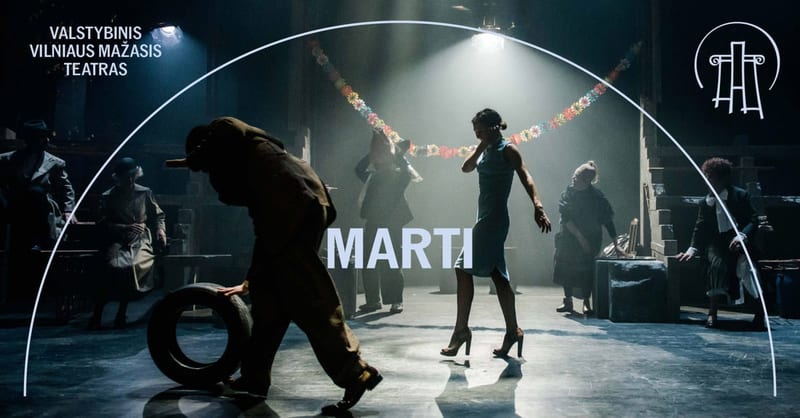
Director G. Tuminaitė and playwright P. Pukytė present a masterpiece of classic Lithuanian literature to the public, presenting it in a new and highly attractive way. By abandoning the stereotypical interpretations that have grown around this work by Žemaitė and its famous characters, the creators, along with a team of actors from several generations, allow us to see the author of the work herself in a completely different light.
Director – Gabrielė Tuminaitė
Based on the short story by Žemaitė
Playwright – Paulina Pukytė
Scenographer – Vytautas Narbutas
Composer – Faustas Latėnas
Costume Designer – Vilma Galeckaitė-Dabkienė
Makeup Artist – Dalia Žakytė-Bučienė
Lighting Designer – Vaclovas Grinius
Cast:
KATRĖ – Indrė Patkauskaitė
VINGIENĖ – Eglė Gabrėnaitė
VINGIS – Arvydas Dapšys
VINGIŲ JONAS – Tomas Kliukas
PASSERBY – Daumantas Ciunis
DRIEŽAS, KATRĖ'S BROTHER – Tomas Stirna
KATRĖ – Agnė Šataitė
DRIEŽIENĖ – Rasa Jakučionytė
VILLAGE WOMEN – Jūratė Brogaitė, Vilija Ramanauskaitė / Ilona Kvietkutė
The play asks whether the modern world, which celebrates women's emancipation and equal opportunities, has really changed so much from the one described by Žemaitė? The play reflects the creators' attempts to understand the 19th-century concepts of marriage, family, love, and happiness and compare them with modern ones.
The Small Theatre's "Marti" does not illustrate rural life. Nevertheless, the environment created by Vytautas Narbutas for the characters – the remnants of an abandoned stadium – is permeated with the atmosphere of both rotting houses and a dilapidated interior. The play is full of stage symbolism and generalizations, creating an almost surreal world. Having arrived at the Vingiai house, Katrė finds herself in a real nightmare from which only death can free her…


