Theater
VMT play
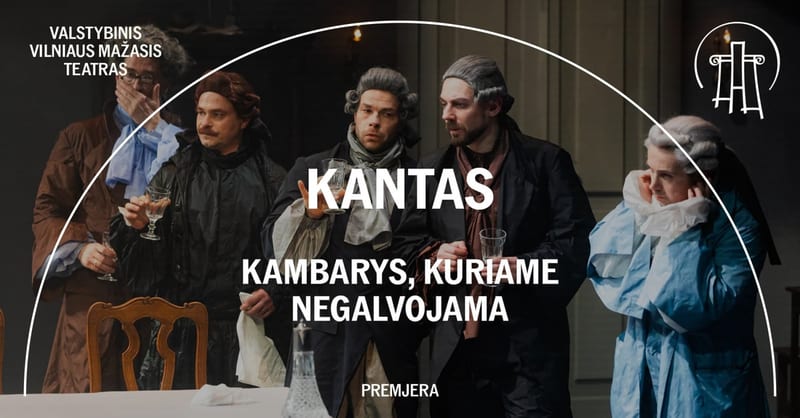
Kant. the room where no thinking is done
THU, 29 OCT · 18:00
Valstybinis Vilniaus mažasis teatras · Gedimino pr. 22
From €25.60Tickets ↓
About this event
Marius Ivaškevičius
Kant. the room where no thinking is done
Three-part play
Preliminary duration – 4 hours
Premiere – April 25, 2025
Director – Oskaras Koršunovas
Set designer – Gintaras Makarevičius
Video artist – Rimas Sakalauskas
Choreographer – Vesta Grabštaitė
Costume designer – Sandra Straukaitė
Composer – Antanas Jasenka
Lighting designer – Eugenijus Sabaliauskas
Content consultant – Vincentas Klipčius
Assistant director – Andrius Merkevičius
Cast:
IMMANUEL KANT – Kirilas Glušajevas
MARTIN LAMPE – Ramūnas Cicėnas
PHOEBE – Indrė Patkauskaitė
JOHANN SCHULTZ – Mantas Vaitiekūnas
JOHANN VIGILANTIUS – Daumantas Ciunis
JOHANN SCHEFFNER – Leonardas Pobedonoscevas
JOEL – Jokūbas Bareikis
FRIEDERIKE – Greta Bendžė
ANNA – Gintarė Latvėnaitė
JOHANN KAUFMANN – Vytautas Rumšas (Jr.)
OLD WOMAN – Ilona Kvietkutė
A year ago, at the State Small Theatre of Vilnius, director Oskaras Koršunovas presented the first act of the play "Kant". The sketch quickly garnered interest and audience sympathy. With the play "Kant", the playwright continues the theme of historical figures at the Small Theatre of Vilnius. Together with the enduringly popular plays "Madagascar" and "Mistras", the work will form a kind of trilogy. Having assembled an ensemble of talented actors well-known to the public, the renowned director Oskaras Koršunovas, who has created many excellent works together with Marius Ivaškevičius, is staging a play at the Small Theatre of Vilnius for the first time.
When & where
OCT
NOV
DEC


