Exhibition
Single-work exhibition. "Dispersed Images"
About this event
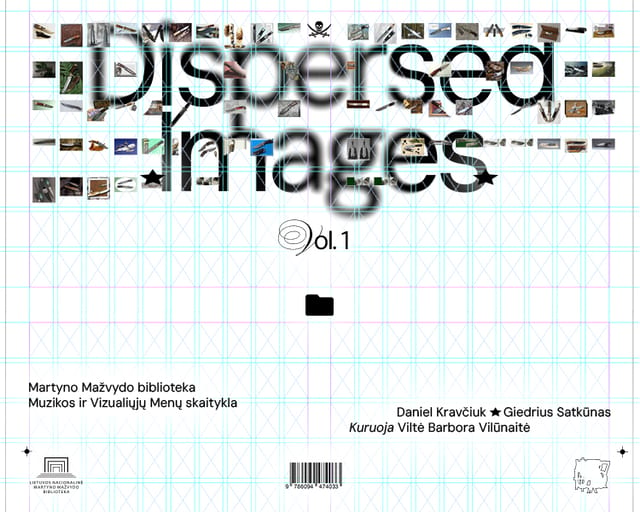
From August 3 to November 30, the National Library of Lithuania (Music and Visual Arts Reading Room, 5th floor) is exhibiting "Dispersed Images," an art project-book created by the art collective "Postvisible" that explores the internet as an archive and a space for cultural memory.
"Dispersed Images" hangs between an art object and an archive of visual material of unclear purpose. Flipping through the book, you will find thousands of images categorized into digital folders that previously existed on the internet as so-called torrents (a method of streaming/partial file downloading). The photographs were downloaded using the seeding process of this technology – where parts of a file, which users share with each other in a server network, are in a way dispersed. This process is unique in that if there are no longer users sharing the file in the user network, the file itself ceases to exist. In such a system, images do not seem to exist in reality; their existence is more fragile than that of analog photographs. In such a structure, the more users share files, the safer they are. A wide network of people is responsible for preserving the data; the users of this process act as an archiving tool. Thus, digital documents, like rare manuscripts, disappear if left unattended.
The content of this book consists of images created or collected by people, obtained from obscure sources, and collected without a clear purpose. This format of sharing, in which authorship fades with each image shared, exists itself as a historical source: it records how the internet used to work and what was published on it. Here, the previously described file downloading method, as well as the processes of illegal and free acquisition of information or content, are becoming increasingly rare in our daily lives. What could once be obtained illegally from the vastness of the internet at the risk of downloading a virus or facing a hacking threat has now been replaced by subscription models offered by global institutions for almost all sources of information (articles, films, recipes, lessons), although a smaller but real risk of data leakage remains. This exhibition book reveals what function the internet performed in people's lives and what information they had access to.
The book and the images contained within it exist as a snapshot of a memory from when the internet was freer and more open, provided you knew how to use it as a source and tool. At that time, websites and databases were more independent and harder to find. Now, the internet is more accessible to a larger part of humanity, but the amount of freely moving, free information is decreasing. This is where libraries and other memory institutions come to the rescue, digitizing images and making them publicly available; the content remains free, but copyrights remain intact.
The format of the images presented in the book offers a look at how images traveled from hand to hand, from screen to screen, through folders, when infrastructures like "Google Images" or other search engines did not yet have strong foundations. Such an artifact – thousands of unique images created by people (maps, photographs, memes, caricatures, digital drawings) – in the age of rapidly spreading artificial intelligence (AI), when AI is increasingly invading commercial and public spaces, helps to understand and evaluate the situation of what digital images looked like when their only creator was a human, not an AI prompt. The obvious contrast between a human-created and an AI-generated image can act as a suggestion to view computer technologies as tools, and image creation as a craft that encourages digital independence.
ISBN 978-609-447-403-3
"Postvisible" is a collective of interdisciplinary creators, writers, and curators guided by an open model of communication and collaboration. The publication "Dispersed Images" is the collective's first project. Although the field of interest of "Postvisible" is broad and undefined, the book focuses on digitality and its sidelines.
Curated by: Viltė Barbora Vilūnaitė
Compiled by: Daniel Kravčiuk and Giedrius Satkūnas
We thank: Ana Baravykienė, Irma Bazienė-Stanaitytė, Monika Pakerytė, Dovydas Černiauskas, and the Department of Photography and Media Art of the Vilnius Academy of Arts.
The "Postvisible" collective sincerely thanks the Martynas Mažvydas National Library of Lithuania for their cooperation.


