Theater
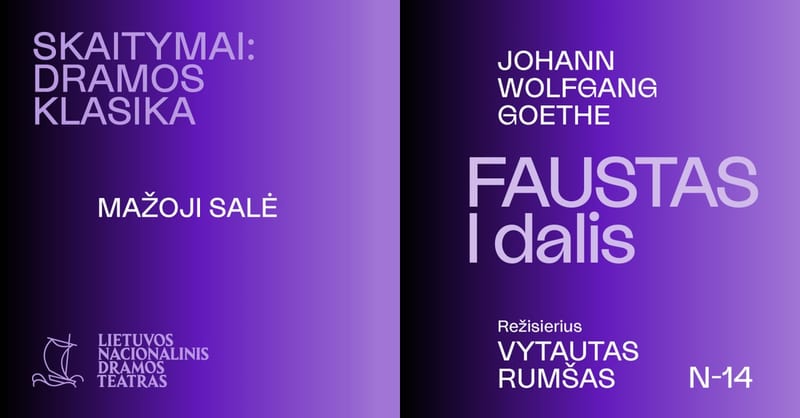
READINGS: DRAMA CLASSICS. J. W. Goethe ''Faust''. Part I, dir. Vytautas Rumšas
SUN, 08 NOV · 16:00
Lietuvos nacionalinis dramos teatras. Mažoji salė · Gedimino pr. 4
From €8Tickets ↓
About this event
Authors of the idea: Vytautas Rumšas and Dalia Michelevičiūtė
Director: Vytautas Rumšas
Participating in the reading:
Participating in the reading are LNDT actors: Vytautas Rumšas, Algirdas Dainavičius, Jurga Kalvaitytė, Povilas Budrys, Dalia Michelevičiūtė, Adrija Čepaitė, Gediminas Rimeika, Ramutis Rimeikis, Arūnas Vozbutas
Saxophone performance by Petras Vyšniauskas
The pact between Heinrich Faust, a curious scholar, and the cunning devil Mephistopheles becomes a disastrous journey into an abyss of spiritual turmoil. In search of eternal youth and the limits of knowledge, Faust's soul is condemned to eternal restlessness. In Goethe's "Faust", the world becomes a vast theater where the search for love, truth, and beauty intertwine. Here, thinkers and students, ancient heroes and gods, mythical northern creatures, and characters created by the author's own imagination live together.
Johann Wolfgang von Goethe (1749–1832) is one of the most prominent German writers, a poet, philosopher, and thinker, considered a classic of all European literature. He wrote "Faust" almost his entire life – from his youth until old age, constantly refining the work and deepening its philosophical content. The first part of "Faust" appeared in 1808, and the second – after Goethe's death, in 1832. This work reflects the intersection of Enlightenment and Romanticism ideas, as well as the author's desire to understand human spiritual limits, the thirst for knowledge, and the eternal struggle between good and evil.
When & where
NOV
DEC