Exhibition
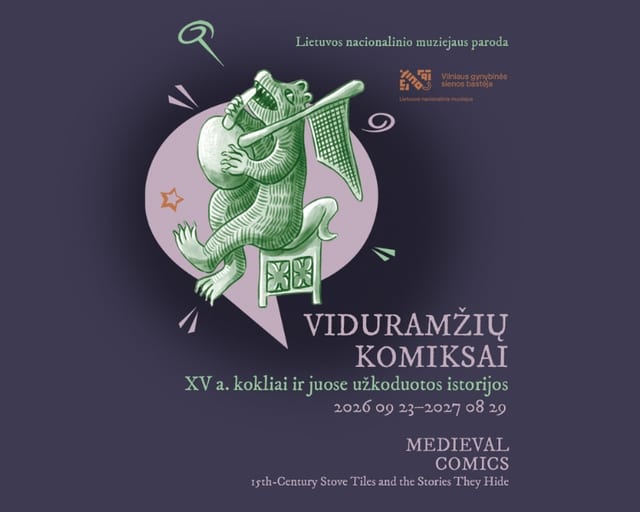
Exhibition "Medieval Comics"
About this event
The Middle Ages is an epoch that lasted from the fall of the Western Roman Empire (5th century) to the 13th–15th centuries. The Italian poet Francesco Petrarca used the term "Dark Ages" to describe this period, long establishing a myth about Europe's intellectual and cultural stagnation. And although to Renaissance humanists this era seemed to be shrouded in the shadow of ancient culture, the significance of the Middle Ages should not be underestimated, because it was then that solid foundations were laid for modern Europe: universities, municipal self-government, and legal systems emerged, and book printing was invented, triggering a true information revolution. These and many other discoveries of that time irreversibly changed the world and gave rise to subsequent technological progress.
A tile stove is one of the late medieval discoveries that we still use today. In the 13th century, the climate in Europe began to cool, so it was necessary to find a way to heat rooms quickly and efficiently. The first such stoves appeared in the Alpine region. Over time, they became not only functional but also an important element decorating the rooms. Various narratives were imprinted on the tile plates, which people of that time could read just as we read comics today: noble coats of arms, scenes from the lives of saints, fantastic creatures and animals, instructive allegories, reflections of court life – hunting, knightly tournaments, music-making, and more. Such heating devices could only be afforded by the wealthy nobility.
This late medieval innovation arrived in the Grand Duchy of Lithuania from neighboring lands with almost no delay: by the 15th century, stoves were already being built from both pot-like and flat decorated tiles. Gothic tiles are found in Vilnius and Trakai – in the court of the Grand Duke of Lithuania or in places where state officials and wealthy townspeople lived. Tiles with identical motifs, state and dynastic coats of arms – the Polish Eagle, the symbols of the Gediminids and Jagiellonians – are found both in Lithuania and in Poland. It is precisely such artifacts that became the basis for this international exhibition. The exhibition presents exhibits from the Museum of the Origins of the Polish State in Gniezno and the National Museum in Kielce, as well as from the collections of the National Museum – Palace of the Grand Dukes of Lithuania, the National Museum of Lithuania, and the Trakai History Museum.
The exhibition invites you to immerse yourself in the fantastic and magical world of the late Middle Ages, to experience that the symbols that appeared several hundred years ago and the creatures born in the imagination of people of that time remain part of our everyday life to this day, and to reflect on the meaning they acquire in contemporary culture.
The exhibition "Medieval Comics" opens at the Vilnius Defensive Wall Bastion on September 23 at 6 p.m.
Sponsors and partners
Organizer
National Museum of Lithuania
Partners:
National Museum in Kielce
Museum of the Origins of the Polish State in Gniezno
National Museum – Palace of the Grand Dukes of Lithuania
Trakai History Museum
Vilnius Potters' Guild
Information partner
JCDecaux


