Exhibition
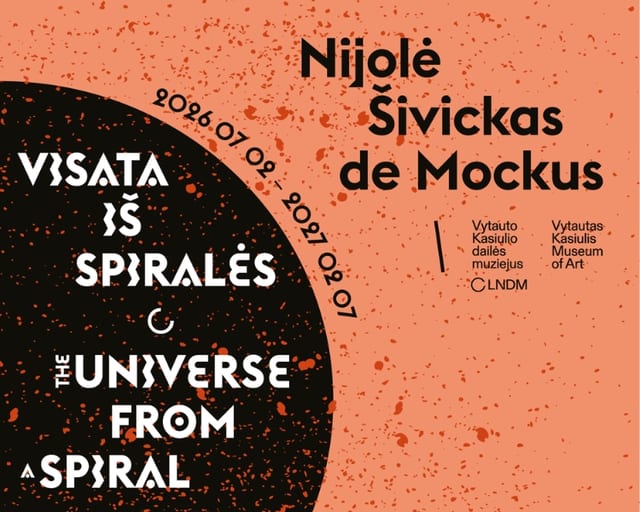
Nijolė Šivickas de Mockus. Universe from a Spiral
About this event
Nijolė Šivickas de Mockus (1925–2018) was a Colombian artist of Lithuanian descent whose life and work encompass the dramatic historical turning points of the 20th century, the experience of emigration, and a unique artistic path.
Born in the Kėdainiai district, she grew up in independent Lithuania, but in 1944, as the second Soviet occupation approached, she fled to Germany with her sister. There, she worked in a metalworking factory, studied at the State Academy of Fine Arts in Stuttgart, and, influenced by postwar European art and Bauhaus ideas, began to form her own distinctive creative style.
After holding her first solo exhibition in Colombia in 1955, the artist soon discovered clay—a material that would define all her subsequent work. Raising two children alone after the death of her husband, she founded the "AkmuO" workshop, which became an important center for design, crafts, and art. Later, her work became dominated by organic forms inspired by nature and pre-Columbian cultures, and her sculptures and objects merged into spatial compositions that the author called installations.
The artist left behind a rich legacy of drawings, paintings, sculptures, and installations, in which the cultural experiences of Lithuania, Europe, and Latin America merge. Exhibition curator and researcher of Nijolė's work, Laura Moreno Barbosa, invites viewers to look at this body of work as a cyclical, spiral whole—a meeting of cultures inspired by the worldview of indigenous American peoples and inviting one to embark on a journey of discovery.