Theater
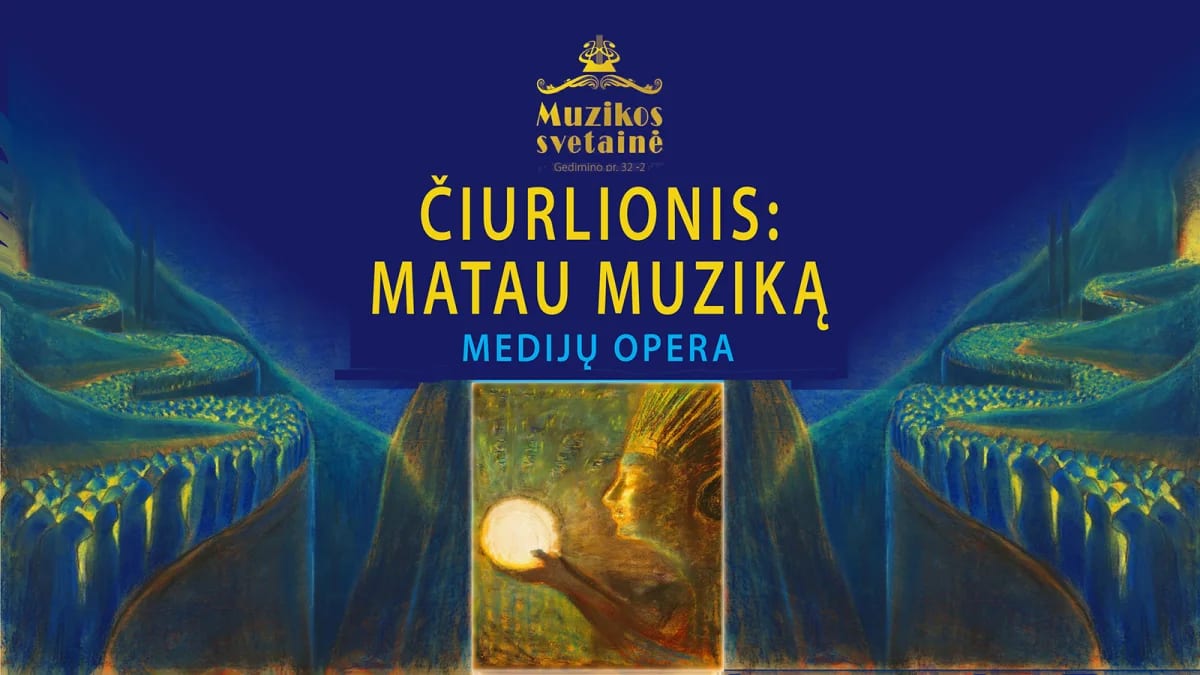
Media opera ČIURLIONIS: I SEE MUSIC
FRI, 28 AUG · 18:30
MUZIKOS SVETAINĖ · Gedimino pr. 32 - 2
From €21.80Tickets ↓
About this event
The media opera performance "Čiurlionis: I See Music" is a contemporary wordless fairy tale based on the works of Mikalojus Konstantinas Čiurlionis, where music, visuals, and light merge into a cohesive dramaturgical journey. The authors of the performance are Audronė Žigaitytė and Mantas Bartusevičius. The visual dramaturgy of the performance utilizes over 200 of M. K. Čiurlionis' paintings, which form a shifting spatial structure and become an active part of the artistic narrative. The musical fabric of the performance consists of various genres of Čiurlionis' works.
The structure of the performance is based on a consistent movement through elements and states – from the primordial source and the depths of the forest to cosmic visions and the horizon of the sea. The mythological grass snake (žaltys) was chosen as the symbol of the narrative, perceived here not as a character, but as a principle of movement, transformation, and life – a line, a curve, a pulse of light, leading the viewer through the Čiurlionian worldview.
The musical fabric of the performance consists of various genres of Čiurlionis' works. It features the Lithuanian folk song harmonized by Čiurlionis, "Sutems tamsi naktužėlė," performed by the Vilnius Sacred Music Choir ADORAMUS. The chamber line continues with the first part of the Quartet, arranged for orchestra by Vilhelmas Čepinskis and performed by the Šiauliai Chamber Orchestra SOLIARIS, conducted by the arranger. The symphonic scale is created by fragments of the symphonic poems "In the Forest" and "The Sea," as well as the cantata "De Profundis," performed by the Lithuanian National Symphony Orchestra and the Kaunas State Choir (artistic director Petras Bingelis), conducted by Juozas Domarkas.
"Čiurlionis: I See Music" invites the viewer not to observe, but to experience – to listen to the movement, light, and sound, through which the living, constantly changing world of Čiurlionis is revealed.
When & where
AUG