Music
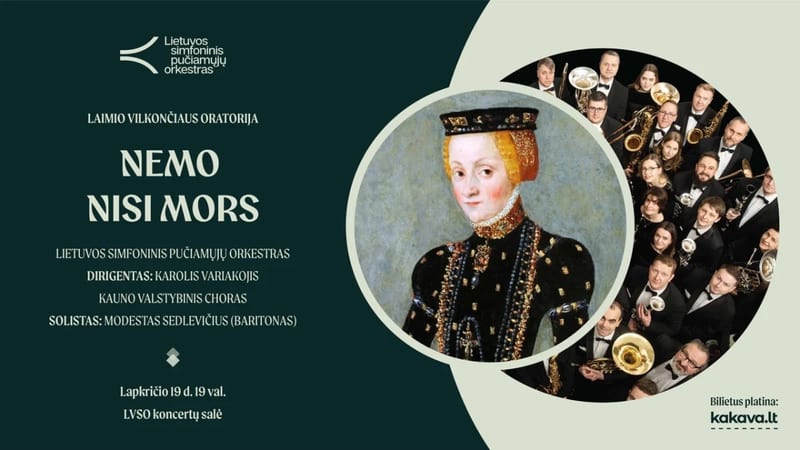
Laimis vilkončius' oratorio "nemo nisi mors"
About this event
In 2026, Lithuania will commemorate the 500th anniversary of the birth of Catherine Jagiellon. There has been increasing discussion recently about this figure and her historical role. She was the youngest daughter of Sigismund the Old and Bona Sforza, sister of Sigismund Augustus, Duchess of Finland, and Queen of Sweden – her son, Sigismund Vasa, began the Vasa dynasty of rulers of the Polish-Lithuanian Commonwealth.
The life story of Catherine, also known as the "Queen of Rose and Stone," and the theme of personal sacrifice and duty become the narrative axis of the oratorio, which is symbolically expressed in the work's title "Nemo Nisi Mors" (Lat. "nothing except death") – such an inscription is on Catherine Jagiellon's tomb in Uppsala (Sweden). Her story still inspires the courage to be oneself, to discover inner strength, and to calmly, trusting one's intuition, accept the changes that lead to discoveries.
The oratorio is a work lasting about an hour for baritone, choir, and symphonic wind orchestra. The libretto author is the National Culture and Art Prize laureate Rimvydas Stankevičius; the work is performed by the Lithuanian Symphonic Wind Orchestra and the Kaunas State Choir, with the soloist part sung by Modestas Sedlevičius, and conducted by Karolis Variakojis.


