Exhibition
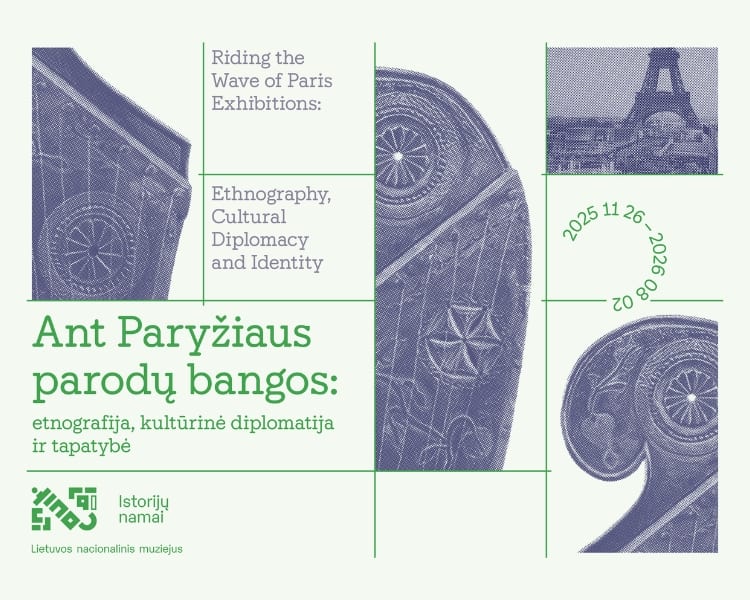
International exhibition "On the Wave of Paris Exhibitions: Ethnography, Cultural Diplomacy, and Identity"
About this event
The exhibition tells the story of Lithuania's efforts to be visible in the world amidst geopolitical challenges, utilizing cultural diplomacy and self-presentation through art, traditions, and symbols. Paris became a place where Lithuanian culture could be heard in the presence of other nations, and the exhibitions held there served as a platform to tell our story.
The first Lithuanian presentation at the 1900 World's Fair in Paris was more than just a cultural event. It was a bold political declaration made through folk art exhibits, which demonstrated the vitality of our nation while imperial Russia was stifling our statehood.
In 1935 and 1937—more than three decades later—the exhibitions held in Paris spoke of the ambitions of an independent Lithuanian state. Participation alongside Latvia and Estonia symbolized the unity of the Baltic states and their place in Europe. Folk art took on a new meaning here—it was no longer a sign of survival, but an expression of aesthetics and creative maturity.
The exhibits, documents, and photographs from these historical exhibitions, currently preserved in museums in France, Lithuania, Latvia, and Estonia, have been gathered in one place for the first time in many decades and are presented in this exhibition. They are complemented by the work of contemporary artists, inspired by ethnography and raising questions of identity.
The exhibition opens at the House of Histories on November 26, 2025, at 6:00 PM and will run until August 2, 2026.
Organizer
National Museum of Lithuania
Exhibition organized in cooperation with
Museum of European and Mediterranean Civilisations (Mucem)
National M. K. Čiurlionis Art Museum
Exhibition funded by
Ministry of Culture of the Republic of Lithuania
Main partner
French Institute in Lithuania
Information partners
LRT
Delfi
JCDecaux
Exhibition concept authors and curators:
Raphaël Bories
Dr. Miglė Lebednykaitė