Exhibition
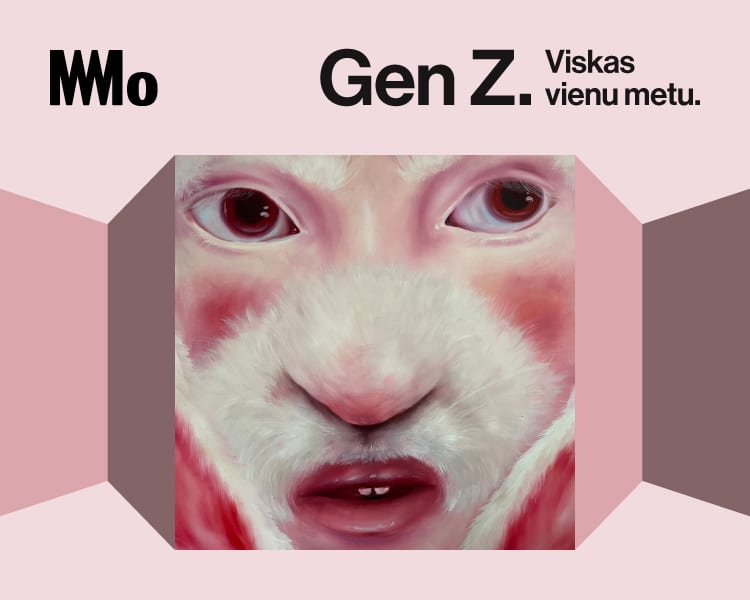
Gen Z. Everything Everywhere All at Once
About this event
The exhibition features twenty young artists living in eleven Eastern European countries – a region shaped not by a shared memory, but by inherited ruptures, deferred futures, and a constant state of transition. These artists do not view history as a finished narrative and do not seek to resolve it. Rather, they live in a present marked by instability.
Work messages, vacation selfies, the latest daily news, war reports, online shopping – areas that were previously separated and often considered incompatible are now seamlessly intertwined in everyday digital life. Desires, fear, pleasure, empathy, and distraction coexist on a single screen, often at the same time.
Generation Z is the first generation to have grown up in such conditions from the very beginning. Contradictions no longer require resolution. What previously seemed incompatible – public and private, intimacy and openness, play and anxiety, work and leisure – have long since become fluid, unstable, and intertwined. The present acts as a dense field where various impulses, affects, and images collide; at the same time, it becomes a refuge from an accelerated and uncertain future.
Switching easily from one role, profile, and identity to another, these artists maintain the tension of opposites instead of dissipating it: digital and physical space, materiality and immateriality, mind and emotion, vulnerability and control. Identity is no longer a stable core, but an endless self-creation in interaction with others. The self is collective, based on relationships, and rooted in networks of attention and affect. Everything at once.