Experience
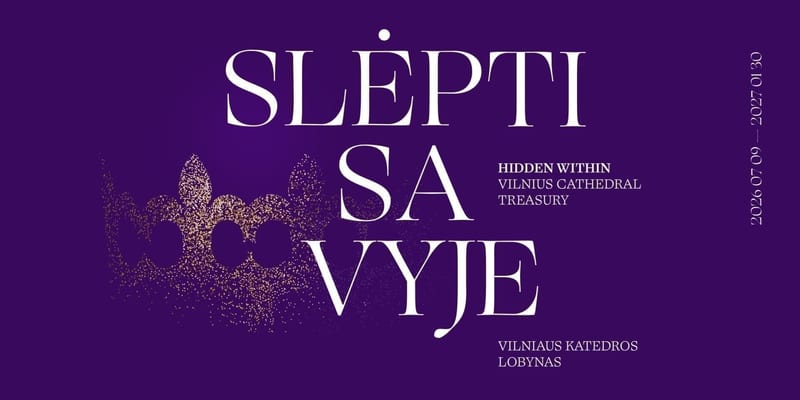
Guided tour of the exhibition "Hidden Within" with a visit to the Cathedral catacombs
About this event
We invite you to experience the thrill of discovery and feel the tension of a historical event – not only to see the 16th-century regalia of the rulers of Lithuania and Poland, but also to visit the Vilnius Cathedral vaults – the place where they were discovered, as well as the royal mausoleum.
In the Cathedral vaults, you will see the royal crypt discovered in 1931, following an exceptionally severe flood of the Neris and Vilnia rivers in Vilnius, as well as the royal mausoleum, which was designed between 1936 and 1939 but remained unfinished due to the outbreak of World War II.
The narrative will continue at the exhibition "Hidden Within". There, we will review the echoes of the discoveries made in 1931, 1985, and 2024, which will allow for a new perspective on the history of the treasury and the contexts of its concealment and discovery. You will learn what the funeral insignia placed in the grave symbolized and get acquainted with other valuables found in the hiding place – queens' jewelry, testifying to the craftsmanship of Renaissance goldsmiths, a collection of precious stones, and plaques and votive offerings from the St. Casimir Chapel of Vilnius Cathedral.
Duration: 2 hours. Meeting point – Vilnius Cathedral Bell Tower (Katedros a. 2) Attention! The number of participants in the tours is limited. It is necessary to purchase a ticket in advance (15 EUR, discounted – 8 EUR) via the "Paysera" ticket system. If you have purchased a discounted ticket, please have a document confirming your eligibility for the discount ready.
The exhibition "Hidden Within" will be open at the Church Heritage Museum (Šv. Mykolo g. 9, Vilnius) from July 9 to January 30, 2027. More information: www.bpmuziejus.lt, email muziejus@muziejus.lt or tel. +370 5 269 7803; media inquiries tel. +370 684 07792.
The exhibition is organized by the Church Heritage Museum, with the Vilnius Academy of Arts as a partner. The museum's activities are funded by the Vilnius Archdiocese, the Lithuanian Council for Culture, and the Vilnius City Municipality. The project is partially funded by the Research Council of Lithuania.


