Theater
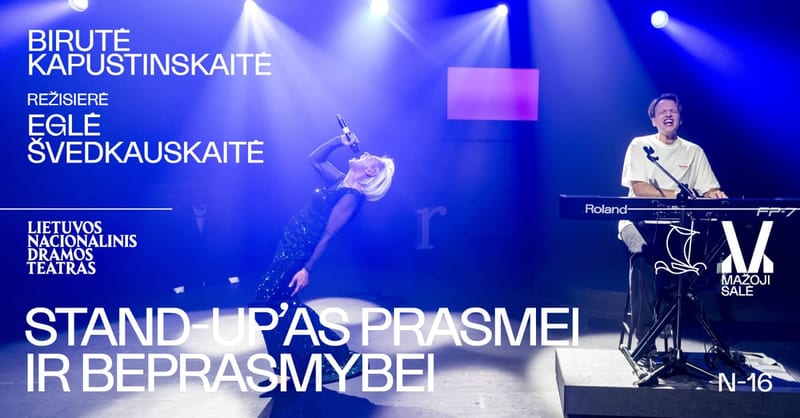
Birutė Kapustinskaitė. STAND-UP FOR MEANING AND MEANINGLESSNESS, dir. Eglė ŠVEDKAUSKAITĖ
THU, 15 OCT · 19:30
Lietuvos nacionalinis dramos teatras, Mažoji salė · Gedimino pr. 4
From €28.20Tickets ↓
About this event
The October 15th performance of STAND-UP'AS PRASMEI IR BEPRASMYBEI will be subtitled in English. Subtitles are best viewed from rows 7-10.
◊ 2024 Golden Stage Cross. Best Actress – Vitalija Mockevičiūtė ◊ 2024 Golden Stage Cross. Best Playwriting – Birutė Kapustinskaitė
Director — Eglė ŠVEDKAUSKAITĖ
Set Designer — Ona JUCIŪTĖ
Costume Designer — Dovilė GUDAČIAUSKAITĖ
Composer — Ernestas KAUŠYLAS
Lighting Designer — Monika ŠERSTABOJEVAITĖ
Assistant Director — Kotryna SIAURUSAITYTĖ
Producer — Rugilė PUKŠTYTĖ
CAST
Mother — Vitalija MOCKEVIČIŪTĖ
Son — Karolis KASPERAVIČIUS
"When they invited me to create this act, I said, okay, I'll create it, but you know, it's going to be dark. They said, that's very good, people like darkness. I said, really? They said, yeah. I said, well, let's go."
For the first time on the theater stage, stand-up comedy – a genre that cleanses not only the storyteller but also the listener through laughter. Making another person laugh is a truly difficult task. And an even harder task, which concerns the theater using humor as a form of communication, is to touch upon painful topics of grief, loss, and suicide that are close to us all. To stir something unexpected in a person, to help them laugh at themselves, to look at painful experiences from the side so that they can come to terms with them.
Collaborating for the first time, playwright Birutė Kapustinskaitė and director Eglė Švedkauskaitė invite the audience to travel together into new theatrical forms and explore loss in a family through a single stand-up comedy act.
The play's characters: Mother – a famous TV host, and Son – a successful stand-up performer – neither is at a loss for words, yet when faced with the loss of their Father, communicating becomes difficult after all. This is a story about letting go of anger, shame, and guilt, and searching for how to open up to vulnerability and to each other.
"Stand-up for Meaning and Meaninglessness" is a comedic play about the main characters' attempt to communicate after the loss of their father. Black humor, self-irony, and narrative humor (stand-up) are combined here with drama, weaving together a story about loss, about the mother and son's relationship with society's attitude toward grief, and the resulting need to adapt," says playwright Birutė Kapustinskaitė.
When & where
OCT
DEC
JAN


