Theater
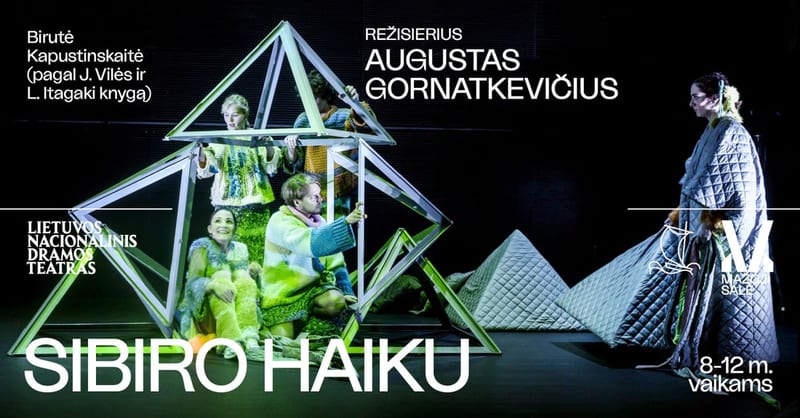
Birutė Kapustinskaitė. SIBERIAN HAIKU, dir. Augustas GORNATKEVIČIUS
SUN, 15 NOV · 14:00
Lietuvos nacionalinis dramos teatras, Mažoji salė · Gedimino pr. 4
From €12Tickets ↓
About this event
Play for children aged 8–12
Director — Augustas GORNATKEVIČIUS
Set Designer — Simona DAVLIDOVIČIŪTĖ
Composer — Jūra Elena ŠEDYTĖ
Lighting Designer — Dainius URBONIS
Movement Coordinator — Gintarė ŠMIGELSKYTĖ
Assistant Director — Regina GARUOLYTĖ
Producer — Rugilė PUKŠTYTĖ
CAST
Miglė POLIKEVIČIŪTĖ
Gediminas RIMEIKA
Jolanta DAPKŪNAITĖ
Augustė ŠIMULYNAITĖ
Marius REPŠYS
Lukas MALINAUSKAS
Based on the book "Siberian Haiku" by J. Vilė and L. Itagaki
Recognized as the best children's book of 2018, the comic book "Siberian Haiku" by Jurga Vilė and Lina Itagaki finds a way to tell children about the cruelties and daily life of exile sensitively and without embellishment. The play, like the book, centers on children's experiences and a child's perspective on exile.
The book's protagonist, Algiukas, dreams of flying around the world with his friend, the gander Martynas. Soon, that is exactly what happens, but in a completely different way than he imagined. Early one June morning in 1941, a squad of soldiers drags the boy, his sister Dalia, his father Romas, and his mother Uršulė out of their beds and orders them to prepare for a journey – thus, Lithuanians are sent off to Siberia in droves against their will. The child is overwhelmed by many questions – why are they being exiled? What did they do wrong? Where is that Siberia? There, in a distant and foreign land, the family must survive by eating frozen potatoes, salting their soup with tears, and warming their hearts with songs. There, the exile choir "Apples" is born; there, singing gives them wings, and the hope of returning home never leaves them.
"The book 'Siberian Haiku' by Jurga Vilė, which inspired the play, finds a unique form to tell children about the extremely difficult experiences of exile through their own perspective on these cruelties. With the play, we aim to maintain the playfulness of the book, which gives these stories lightness and makes them more accessible to a young audience. By exploring the theme of exile, the play seeks not only to enlighten or recount events but also to help children grasp what seems incomprehensible," says director Augustas Gornatkevičius, who is staging his second play for children.
When & where
NOV
DEC
JAN


