Music
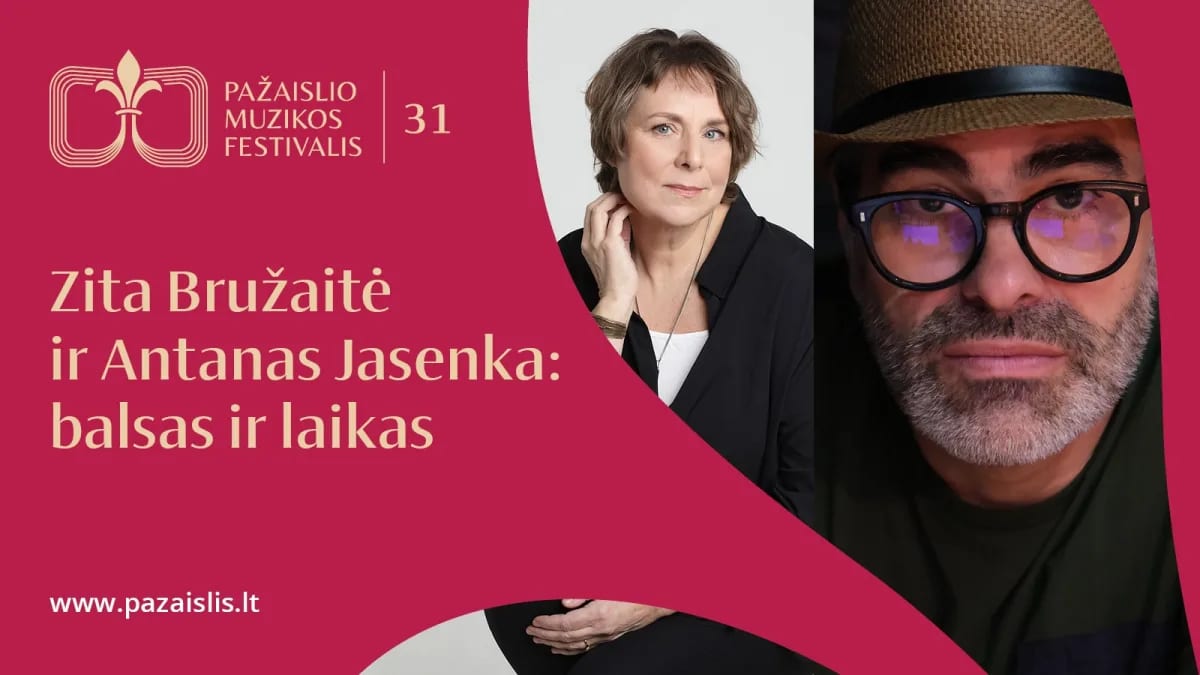
Zita Bružaitė and Antanas Jasenka: voice and time
About this event
At the Kaunas Evangelical Lutheran Church Zita Bružaitė and Antanas Jasenka: voice and time LINA DAMBRAUSKAITĖ (soprano) PETRAS VYŠNIAUSKAS (saxophone) String quartet CHORDOS Ingrida Rupaitė (1st violin) Vaida Paukštienė (2nd violin) Robertas Bliškevičius (viola) Arnas Kmieliauskas (cello)
Two Lithuanian composers of the same generation, two voices – Zita Bružaitė and Antanas Jasenka – invite you to experience a dialogue of their creative work and poetics in the sacred space of the Kaunas Evangelical Lutheran Church.
Both authors completed their composition studies at the same time, in the same academic environment, yet their musical languages unfolded in different directions. In this concert, they meet in a shared space – through voice, instrument, and the poetic word, arriving from the 16th century. The sonnets of the Italian poet Gaspara Stampa and the poet and playwright William Shakespeare come to life here in new forms, raising eternal questions about human existence, oscillating between hope and despair, joy and pain.
The works by Z. Bružaitė and A. Jasenka featured in the program were created for the same ensemble – soprano, soprano saxophone, and string quartet. They are united by the idea of the Renaissance sonnet, which becomes the axis around which different musical aesthetics unfold: from emotional, dramatic expression to subtle, conceptual sound reflection.
This is more than a concert – it is a meeting of two composers, one generation, and two poetic worlds. Here, sound becomes a way to think about time, love, and human experience.
"This program is not only a reflection of our creative portrait, but also a gratitude to the Almighty that we have reached another milestone birthday together and are celebrating it with our friends – the musicians who have interpreted our works more than once" (Zita Bružaitė).
"Although the ensemble performing our works is the same, the artistic directions are different: Zita Bružaitė's music is based on emotional dramaturgy and textual expression, while I wanted to direct the musical flow towards a sonic process and reflection on time" (Antanas Jasenka).
New works by Lithuanian authors reveal how two different poetic and musical languages can arise from a shared experience and meet in a single sonic space.