Playing card exhibition “Collectors: Open cards”
About this event
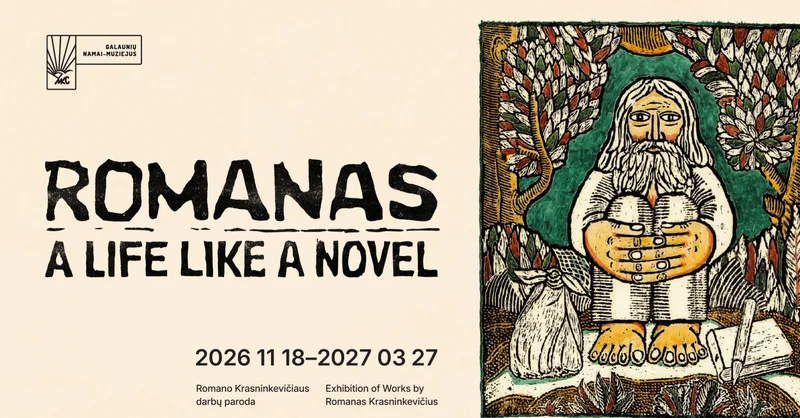
Exhibition by Romanas Krasninkevičius ROMANAS Galaunė House-Museum, Vydūno al. 2, Kaunas Exhibition opening, November 18, 5:00 PM Can a name determine one's destiny? Looking at the life and work of Romanas Krasninkevičius, this question loses its rhetorical nature, for Romanas' life truly turned into a novel (romanas) – a long, winding, dramatic narrative that transferred into his work, which became a kind of chronicle of his life. War and post-war experiences, the loss of loved ones, childhood memories, loneliness, and love for his native land and folk songs became the themes of his works. There was almost no life experience that would not, sooner or later, become a work of art. Romanas' life was also marked by loneliness, which eventually became not only a painful experience but also a lifestyle of his own choosing. ROMANAS is an exhibition about pain and its transformation into creativity. For Romanas, suffering became a kind of creative muse – not an inspiration that awakens the imagination, but a force that compelled him to carve the surface of a board. Romanas would transfer the blows of fate onto the material impulsively, sometimes unexpectedly tearing off a closet door or grabbing a stool and furiously carving what was pressing from within. His words, "for me, creativity was a tragedy, a terrible tragedy!" are a ruthless confession. For Romanas, suffering was the material of his work, its power, and its price. The visual language, compositional principles, and iconography inspired by 18th–19th-century folk woodcuts acquire new, autobiographical meanings in his works. Laconic drawing, rich contours, monumental figures, poetic metaphors, and texts incorporated into the carvings create a unique world where reality intertwines with memories, dreams, and inner experiences. The characters in the carvings often resemble Romanas himself – with his thick beard, build, and facial features. ROMANAS is an exhibition about a man whose work was based on his own life, and for whom art became a way to survive and immortalize what was most precious. Exhibition curator: Vilma Kilinskienė Exhibition coordinators: Raimonda Mineikė, Silvija Burokaitė Exhibition designer and architect: Lina Mozūraitė
Exhibition dates: 2026 11 18 – 2027 03 27