VILNIUS·KAUNAS
LT·EN
Scena
LT·EN
Scena
    • All events
    • Today
    • This weekend
    • This week
    • Date ideas
    • Family events this week
    • Free this month
    • Sport this month
    • Conferences & meetups
    • Stand-up this month
    • All films
    • Today
    • This weekend
    • This week
    • Drama
    • Comedy
    • Action
    • Thriller
    • Horror
    • Science Fiction
    • Animation
    • Documentary
    • All theater
    • Today
    • This weekend
    • This week
    • Opera
    • Ballet
    • Drama
    • Musical
    • Dance
City
VILNIUS·KAUNAS
Language
LT·EN
  • Discover
    When
    • Today
    • This weekend
    • This week
    Collections
    • Date ideas
    • Family events this week
    • Free this month
    • Sport this month
    • Conferences & meetups
    • Stand-up this month
  • Films
    When
    • Today
    • This weekend
    • This week
    Genres
    • Drama
    • Comedy
    • Action
    • Thriller
    • Horror
    • Science Fiction
    • Animation
    • Documentary
  • Theater
    When
    • Today
    • This weekend
    • This week
    Categories
    • Opera
    • Ballet
    • Drama
    • Musical
    • Dance
Scena

Films, stages, concerts and nights out across the city — gathered into one live programme, updated daily.

Browse

  • What's on
  • Discover
  • Films
  • Theater
  • Events
  • Venues
  • The weekly letter

© 2026 Scena · Where the City Happens

  • Search events, venues, dates, or what to do next.
↑↓navigate↵openescclose
Klaipėda Youth Theatre
Theater

Klaipėda Youth Theatre

Play ''Miškelis'' · Dir. V. Masalskis

When & where

SUN · NOV
1518:00
Tickets ↗
Details
Price
From €18.10
Organizer
Klaipėdos jaunimo teatras, VšĮ

About this event

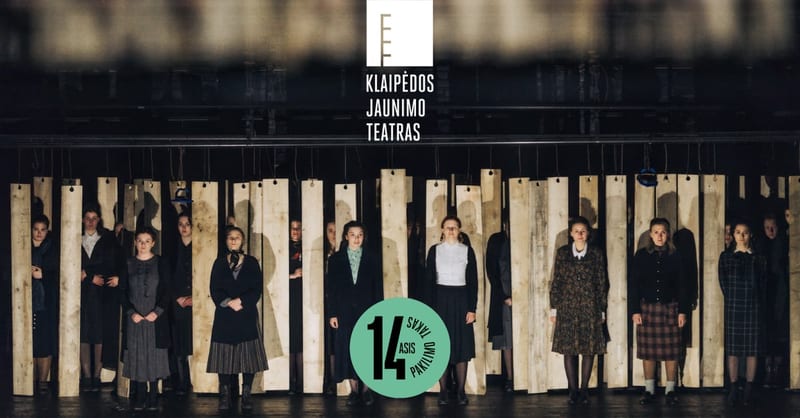
The sketch based on playwright Mindaugas Nastaravičius's "Miškelis" (The Little Forest), which won the 2021 Dalia Tamulevičiūtė Lithuanian Authors Performing Arts Competition, has become a production by the Klaipėda Youth Theatre, bringing together dozens of young-generation actors. Directed by Valentinas Masalskis, the drama tells the story of the June 24, 1941, massacre in Rainiai and the life of one family in its aftermath.

The creation of the play was based on real events, the biographies of real people, interrogation files, and historical research; however, the creators of "Miškelis" call this work not a documentary, but a play of memory and imagination. According to V. Masalskis, it is like a hymn to memory, remembering the victims of Rainiai and attempting to touch upon the themes of 20th-century tragedies with care.

"Although the play is full of facts and events, twists and emotions, there is almost no action in it. The narrator of this story seems to shackle us from the very first sentences and compels us to listen, but we soon realize that this is not just his story. It is a story from all of our memories – from the memories of our grandparents and parents. A story that has not ended and still continues within us. In 'Miškelis', we hear a multitude of voices, and we wander among them until we finally hear that one voice that everyone around is singing about – about a murdered and buried man who returned home," says the play's director.

During the last week of the first Soviet occupation – June 22–28, 1941 – more than 1,000 prisoners and civilians were murdered in Lithuania. As the German army approached, about 3,400 prisoners were deported to Russian prisons and camps, even though a total of 6,000 people were imprisoned in Lithuanian jails at the time. While retreating from Lithuania, Red Army soldiers, together with local collaborators, carried out massacres in the prisons of Kaunas, Panevėžys, and Pravieniškės, as well as in Juodupė, Zarasai, and other locations.

The massacre of political prisoners at the Telšiai prison was marked by particular cruelty. On the night of June 24, 76 political prisoners were taken to the nearby Rainiai forest, where they were murdered and hastily buried. On June 28, with the Germans already in control of Telšiai, the victims were exhumed and examined, revealing that all the prisoners had been brutally tortured. Due to multiple injuries, 46 bodies remained unidentified. Almost all the martyrs of Rainiai were buried in a mass grave in the Telšiai cemetery, while others were taken by their relatives.

Playwright M. Nastaravičius began writing the play "Miškelis" after discovering memories from that time about several prisoners who unexpectedly returned home after the events in Rainiai. Unable to recognize the faces due to multiple injuries, relatives tried to identify the victims by other features – moles, scars, or remnants of clothing. After supposedly identifying them and giving consent to bury the body in a mass grave, relatives would see the person alive at their doorstep some time later.
© OpenStreetMap, CARTO
VenueNacionalinis Kauno dramos teatras

Laisvės ave. 71, Kaunas
Centras

What's on at this venue →

"Such cases were explained simply: after the political prisoners of the Telšiai prison were murdered and the prison was left unattended, the criminal prisoners who were held there at the same time (there were 86 of them) left the prison without hindrance. Some ran and hid, others returned home. In the first days, it was not yet known that the death penalty had been ordered only for political prisoners – their list with names was found later. While reading the memoirs and trying to trace those few people who were not in the Rainiai forest but were mistakenly identified by their relatives, I found another testimony from a man who claimed to have managed to escape from the forest," says M. Nastaravičius.

On June 28, 1941, 73 bodies were exhumed in the Rainiai forest. The remains of three prisoners who tried to escape were found near the village of Džiuginėnai, not far from Telšiai. Some time later, it was revealed that two of the murdered were not prisoners, but Red Army soldiers. It was speculated that they perhaps refused to participate in the massacre or were shot for failing to keep track of all the prisoners. Two prisoners did indeed escape from the Rainiai forest. One was found and shot; the other managed to escape. Having feared the consequences during the Soviet era, he did not mention the events of Rainiai or his survival to anyone. However, in 1988, upon hearing about a special commission to investigate the Rainiai massacre, he told the circumstances of that night in a letter to the Supreme Council of Lithuania.

For a long time, it was thought that the history of Rainiai had no living witnesses, but after this man was interviewed, it turned out that he, Jonas Šapalas, was the only one to have survived the Rainiai massacre. True, the playwright could not find his name and surname on the list of former prisoners. His file has not survived either, but the author of the play relies on the man's testimony about his liberation and hiding, as well as other documents and historical sources examining the Rainiai tragedy. For consultations and references to historical sources, the creators of the play thank Terese Birutė Burauskaitė, a researcher of the Soviet regime and its crimes, as well as historians Mingailė Jurkutė and Arvydas Anušauskas.

The play is also supported by the Klaipėda City Municipality and the Lithuanian Council for Culture.

Playwright: Mindaugas Nastaravičius

Director: Valentinas Masalskis

Composer: Nijolė Sinkevičiūtė

Set Designer: Paulė Bocullaitė

Lighting Designer: Justas Bø

Cast: Karolina Kontenytė, Vaiva Kvedaravičiūtė, Rugilė Latvėnaitė, Simonas Lunevičius, Ieva Pakštytė, Paulius Pinigis, Gytis Šimelionis, Donatas Stakėnas, Marija Žemaitytė, Aurimas Bareikis, Gabija Bargailaitė, Angelina Daukaitė, Ramunė Degutytė, Ilona Doveiko, Elzbieta Girkantaitė, Augustas Gudelis, Kornelija Kiniulytė, Adolfina Kunčiūtė, Laurynas Luotė, Ieva Mačiūnaitė, Vilija Matačiūnaitė, Faustas Mažrimas, Viktorija Miliauskaitė, Kamilė Pilibaitytė, Irmantas Pilis, Miglė Pranevičiūtė, Gintautė Rusteikaitė, Jogaila Šimkus, Osvaldas Tokarevas, Viktorija Valskytė, Enrika Zachaževskytė, Karolina Kuzborska, Aistė Alksnytė, Jūratė Martinaitytė, Livija Krivickaitė, Solveiga Reklaitytė, Donatas Mickūnas, Kristupas Biržietis, Gediminas Povilavičius, Aurimas Bareikis, Gabija Bargailaitė, Elzbieta Girkantaitė, Adolfina Kunčiūtė, Laurynas Luotė, Vilija Matačiūnaitė, Viktorija Miliauskaitė, Kamilė Pilibaitytė, Jogaila Šimkus, Osvaldas Tokarevas, Viktorija Valskytė, Viktorija Aliukonytė, Motiejus Aškelovičius, Auksė Bružaitė, Airida Česonytė, Goda Dambrauskaitė, Emilija Ieva Giedraitytė, Simona Grigoryan, Adomas Jakovlevas, Matas Jeremičius, Orestas Streikus, Pijus Šiaulys, Aurelija Šiškaitė, Džiugas Šveikauskas, Agnė Virkutytė, Emilija Žuravliovaitė.