Theater
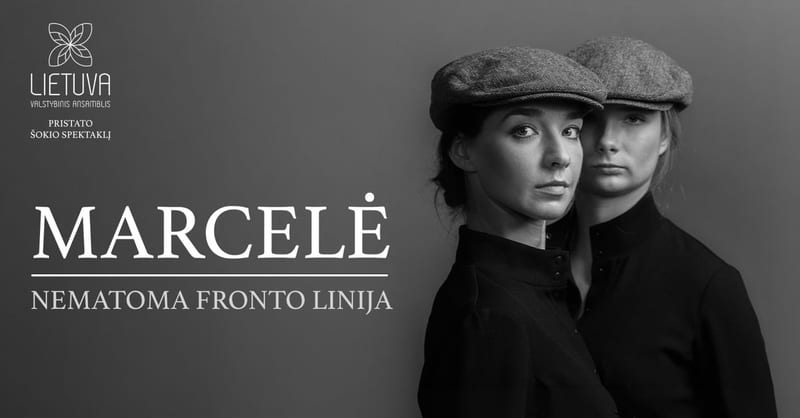
(Kaunas) Dance performance "Marcelė. Nematoma fronto linija"
About this event
An elegant, beautiful agent, strong-willed yet deeply sensitive, even fatalistic. Interwar Lithuanian intelligence officer Marcelė is often called the Lithuanian Mata Hari.
The "Lietuva" ensemble presents a premiere – the dance performance "Marcelė. Nematoma fronto linija" (Marcelė. The Invisible Front Line), inspired by the life and inner stance of the legendary Lithuanian intelligence officer Marcelė Kubiliūtė. The premiere of the performance will take place on April 21, 2027, in Vilnius, at the Lithuanian National Drama Theatre, and will later be shown in other Lithuanian cities.
"Famous names emerge in history, but there are people who quietly, without awards or guarantees that they will ever be remembered, do what changes the fate of the state. Such was Marcelė Kubiliūtė – a silent heroine whose life is inseparable from a complex period of Lithuanian history: the struggles for independence, political tensions, secret operations, and constantly changing threats. We do not seek to retell her biography – we are creating a sensitive, visual interpretation in which human choices, inner tension, loyalty to values, and resistance are revealed through movement," says the director and chief choreographer of the "Lietuva" ensemble, Aušra Krasauskaitė, about the concept.
Marcelė Kubiliūtė is one of the most mysterious women of 20th-century Lithuania. A press and public figure, secret courier, intelligence officer, and riflewoman, participant in the June 1941 uprising, rescuer of Jews, resistance fighter, and political prisoner, but above all – a human being who chose a life where personal fate was sacrificed for the idea of freedom. From 1918 to 1925, she worked in Lithuanian intelligence, and in 1919, she delivered secret documents of the Polish authorities to Kaunas, the then-capital, including the ciphers of the organizers of the uprising being prepared by the Polish military organization in Lithuania (this helped liquidate the rebel organization). M. Kubiliūtė is the only woman in Lithuania awarded all the most important orders of independent Lithuania (the Cross of Vytis, the Order of Gediminas, and the Order of Vytautas the Great), yet she died in poverty during the Soviet era, working as an ordinary typist, faithful to her secret and her country.
The dance story about Marcelė is the third project in A. Krasauskaitė's triptych of dance performances about prominent Lithuanian women: in 2025, she created "Žemaitė N.18(0)", and in 2026, "Sofija. Genijaus šešėly" (Sofia. In the Shadow of a Genius), which is still being successfully performed.
"After Žemaitė and Sofija, I want to turn to another woman who still occupies too little space in our historical memory. Marcelė acted quietly, in the shadows, but her choices were monumental. She operated under extremely dangerous conditions and risked her life. In dance, it is very interesting to look for a way to show what is essentially invisible – secrecy, vigilance, danger, information traveling from person to person, and a person's inner struggle. At the same time, in the new season of the 'Lietuva' ensemble, I want our dance troupe itself to be even more vigorous – to grow in mastery, courage to experiment, and set an ever-higher bar for itself," the director and choreographer continues.